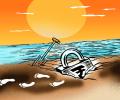
The government has set a direct tax collection target of Rs 13.35 trillion, which includes Rs 7.66 trillion from corporation tax and Rs 5.69 trillion from personal income tax.

The highest water-use efficiency of more than $ 50 per cubic metre is in Oceania, Australia, New Zealand, Singapore, Israel, Denmark, Finland, and Great Britain while the lowest is in Central and South Asia, including India, at less than $ 10 per cubic metre.
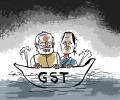
The collections stood at Rs 98,202 crore in the month, against Rs 1.02 trillion in July. The figures indicate continuation of economic slow down which was reflected in the gross domestic product (GDP) growth which plummeted to a 25-quarter low of 5 per cent in the first quarter of 2019-20, experts said.
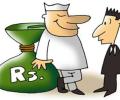
DTC task force also favoured doing away with Dividend Distribution Tax by suggesting taxing dividends in the hands of shareholders.

A committee suggested that CSR expenditure be made tax deductible, in order to incentivise spending by companies. It also said that CSR should not be used as a means of resource-gap funding for government schemes.

Sources in the Fifteenth Finance Commission said that they will implement the provisions after the bill is enacted and the President makes a reference to it.

Digital commerce operators advertising on global social media, which earlier did not pay Google tax on their operations in Jammu & Kashmir, may now have to cough it up at 6 per cent.
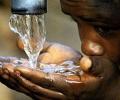
The current estimate, however, largely covers only the cost of infrastructure such as pipes, construction of borewells, overhead costs among others and not the expenditure to be incurred on operation and maintenance.

According to experts by making CSR spending mandatory, the government has made it into a statutory due like tax but with none of its democratic quality.

According to data compiled by the World Bank, the UK's economy grew to $2.82 trillion and the French economy expanded to $2.78 trillion in 2018, against India's $2.73 trillion, showed the data.

The Centre's revenue from GST registered a decline of 10 per cent in 2017-18 compared to revenue of subsumed taxes in 2016-17.

With less than five months left for the report of the Fifteenth Finance Commission to be submitted, its chairman N K Singh said the report will have fiscal road map for states, depending on their current situation.

However, the World Bank has projected India's GDP growth rate at 7.5 per cent for the next three financial years, including the current one.
Government suspects that many of these bank accounts were used to launder money, especially after the demonetisation in November 2016.

A query has been raised about the "missing" Rs 1.7 trillion fiscal hole in India's financial accounts. This is so because the Budget uses the revised estimates, a projection of how much the government was expected to earn, while the Economic Survey uses the first actual numbers.

The aim of the programme is to increase the water table in the stressed areas through dams, ponds, and afforestation. According to a NITI Aayog study, by 2030, the country's water demand is projected to be twice the available supply, implying severe water scarcity for hundreds of millions of people and an eventual 6 per cent loss in the country's GDP.
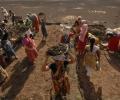
Around 40 per cent of the country is staring at drought-like conditions ahead of the monsoon as water levels have receded sharply.
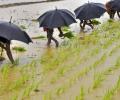
Sowing of crops at this point of time, when the onset of monsoon is delayed and chances of good rains are less, will only push up the cost for farmers and also hamper the yield of the crop: Skymet.

Economists have said if a stimulus is needed it should be different from what was provided in 2008-09, when the economy faced the ripple effects of a global meltdown following the Lehman Brothers collapse.
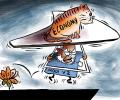
'There are deliberations on whether there can be lowering of income taxes and other sops to keep more money in the hands of taxpayers, enabling them to spend more and boost demand.'
 © 2026 Rediff.com - Investor Information - Advertise with us - Disclaimer - Privacy Policy - Sitemap - Feedback - About us - Terms of use - Grievances